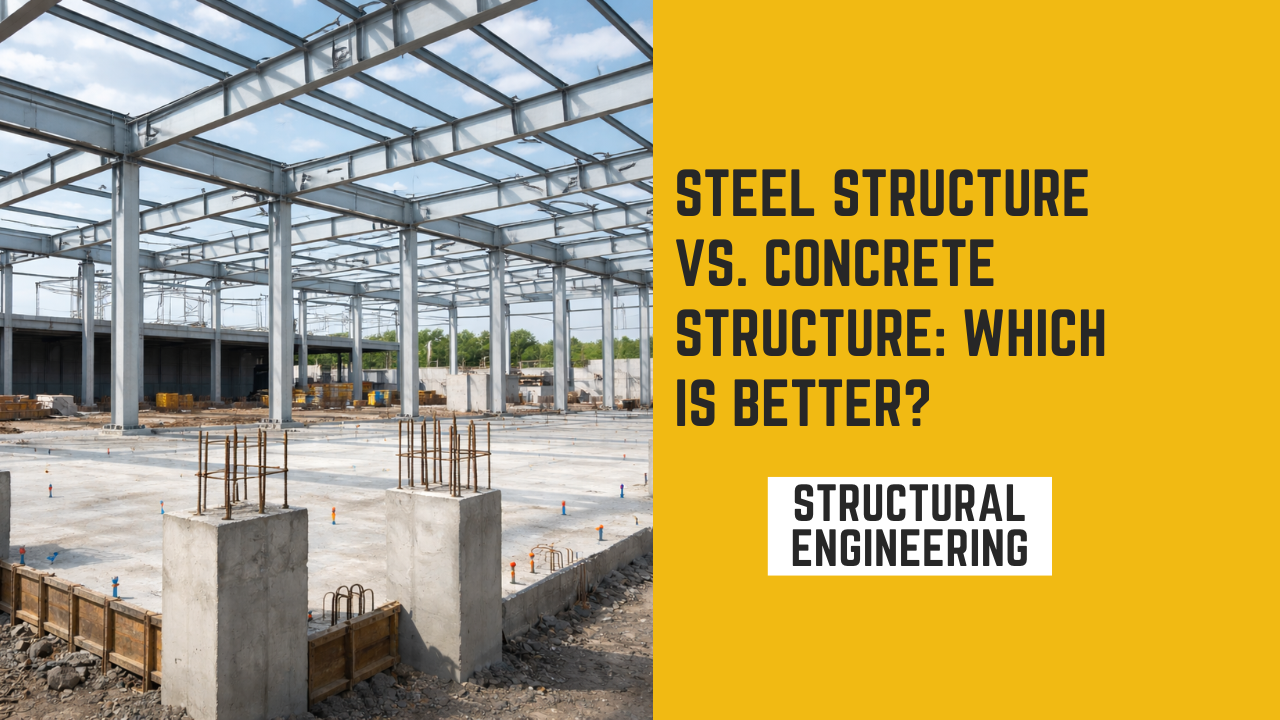
Steel Structure vs. Concrete Structure: Which Is Better?
Introduction
The construction industry has evolved rapidly over the past decades, offering a wide range of materials to engineers, architects, and builders. Two of the most commonly used materials in modern construction are steel and concrete. Each has unique properties, advantages, and limitations, making the choice between the two critical for the success, safety, and longevity of any project
This article provides an in-depth comparison of steel structures and concrete structures, analyzing aspects such as structural performance, cost, sustainability, fire resistance, seismic behavior, maintenance, and practical applications. It will help project owners and engineers make informed decisions about which material is better suited for specific construction needs understanding of steel structures
Steel structures are frameworks primarily made of steel components like beams, columns, trusses, and plates. Steel’s exceptional strength-to-weight ratio, ductility, and flexibility make it suitable for a variety of applications ranging from residential high-rises to long-span bridges.
Understanding Steel Structures
Characteristics of Steel Structures
1. High Strength-to-Weight Ratio: Steel provides maximum strength with minimal weight, reducing foundation loads.
2. Flexibility: Steel structures can absorb and dissipate loads, making them ideal for areas with seismic activity.
3. prefabrication Possibility: Steel components can be manufactured offsite, ensuring quality control and reducing construction time
4. Recyclability: Steel is 100% recyclable, contributing to environmental sustainability
3. Prefabrication Possibility: Steel components can be manufactured offsite, ensuring quality control and reducing construction time.
Application of steel Structure
- High-rise buildings and skyscrapers
- Industrial warehouses and factories
- Bridges with long spans
- Stadiums and auditoriums
- Temporary structures requiring rapid construction
Understanding Concrete Structure
Concrete structures are made from a mixture of cement, water, sand, and aggregates. When combined with steel reinforcement (RCC), concrete can resist both compressive and tensile forces
Characteristics of Concrete Structures
1. High Compressive Strength: Concrete is inherently strong in compression, making it ideal for load-bearing elements.
2. Durability: Resistant to weathering, corrosion corrosion, and fire if properly designed
3. Thermal Mass: Concrete absorbs and retains heat, providing energy efficiency.
4. Versatility: Can be cast into any shape or size, from slabs and columns to dams and silos.
Applications of Concrete Structures
- Residential and commercial buildings
- Bridges, highways, and pavements
- Dams and retaining walls
- Water tanks and silos
- Foundation and footings
Comparative Analysis: Steel vs Concrete Structures
| Feature | Steel Structure | Concrete Structure |
| Strength-to-Weight Ratio | High; lighter, strong framework | Lower, heavier sections needed |
| Construction Speed | Faster due to prefabrication | Slower; curing takes time |
| Durability | Prone to corrosion without protection | Highly durable if designed properly |
| Fire Resistance | Needs fireproofing | Naturally fire-resistant |
| Cost | High material cost; lower labor cost | Lower material cost; higher labor/time cost |
| Flexibility | Excellent for long spans and adaptable designs | Limited span; heavier self-weight |
| Maintenance | Requires painting, inspection, fireproofing | Low maintenance after construction |
| Seismic Performance | Flexible, absorbs energy well | Brittle unless reinforced |
| Sustainability | Fully recyclable, but high energy in production | Locally available, carbon-intensive cement |
Advantages of Steel Structures
1. High Strength-to-Weight Ratio
Steel structures are lighter than concrete structures of equivalent strength. This reduces the load on foundations, potentially lowering foundation costs
2. Rapid Construction
Prefabricated steel components can be assembled quickly on-site, reducing project timelines and labor costs. This is particularly valuable in urban construction, where speed is crucial
3. Long Spans and Flexible Design
Steel’s high tensile strength allows for large, column-free spaces, making it ideal for auditoriums, warehouses, and industrial plants
4. Recyclability
Steel cam be melted down and reused without losing its properties, making it an environmentally sustainable choice
5. Earthquake Resistance
Steel structures are ductile, meaning they can deform under stress without collapsing. This makes them highly suitable for seismic zones
Disadvantages of Steel Structures
1. Corrosion Risk: Steel requires protective coatings or galvanization to prevent rusting
2. Fire Vulnerability: Steel loses strength at high temperatures unless adequately fireproofed.
3. High Initial Cost: Material costs are higher compared to concrete, though reduced labor and time may offset this.
4. Thermal Conductivity: Steel is a good conductor of heat, requiring insulation in extreme climates.
Advantages of Concrete Structures
1. High Durability
Concrete structures can last for decades with minimal maintenance, resisting weathering, corrosion, and abrasion.
2. Cost-Effectiveness
Concrete is often cheaper than steel for residential and commercial projects, especially where labor is available and construction time is less critical
3. Fire Resistance
Concrete is naturally fire-resistant and maintains structural integrity at high temperatures
4. Thermal and Acoustic Insulation
Concrete’s density provides good insulation, reducing energy costs and noise levels.
5. Versatility
Concrete can be molded into any shape, making it suitable for custom architectural designs
Disadvantages of Concrete Structures
1. Heavy Self-Weight
Concrete’s density increases dead loads, requiring more substantial foundations and higher material usage.
2. Slower Construction
Concrete requires formwork, placement, and curing time, which can extend project schedules.
3. Low Tensile Strength
Without reinforcement, concrete cannot resist tensile forces, limiting its standalone use.
4. Difficulty in Modifications
Once cast, concrete structures are difficult to modify or expand without demolition.
Cost Comparison
- Material cost: Steel is costlier per ton than concrete.
- Labor and time: Steel requires less on-site labor due to prefabrication.
- Foundation Requirements: Concrete is heavier, leading to deeper foundations
- Maintenance: Steel requires ongoing maintenance; concrete maintenance is minimal.
Verdict: For high-rise buildings or projects with tight schedules, steel may offer better cost efficiency despite higher material costs. For low-rise buildings and mass housing, concrete is usually more economical.
Structural Performance
Seismic Performance
Steel: Flexible, can dissipate energy effectively during earthquakes.
Concrete: Brittle unless properly reinforced, requires ductile detailing for seismic zones.
Wind Resistance
Steel: Lighter and more flexible, ideal for tall structures in windy regions.
Concrete: Heavier, taller structures may require thicker sections for stability
Fire Resistance
Steel: Must be fireproofed using coatings or encasements
Concrete: Naturally fire-resistant, maintaining strength at high temperatures.
Sustainability
Steel: Fully recyclable, reduces environmental impact, but has high energy consumption in production.
Concrete: Uses locally available materials, but cement production contributes significantly to CO₂ emissions.
Modern construction trends favor green concrete, high-strength steel, and composite structures combining both materials for optimal environmental and structural performance.
Real-World Applications
Steel-Dominated Projects
- Burj Khalifa, Dubai – Steel frame with concrete core.
- Millau Viaduct, France – Long-span steel cable-stayed bridge.
- Industrial Warehouses – Prefabricated steel frames for flexibility and speed.
Concrete-Dominated Projects
- Hoover Dam, USA – Massive concrete structure for water retention and power generation.
- Pantheon, Rome – Ancient concrete structure still standing after 2,000 years.
- Residential Complexes—Commonly built using reinforced concrete.
Composite Structures
- Modern high-rise buildings often combine steel frames with concrete slabs, offering speed, flexibility, and durability.
Decision Factors: Which Material to Choose?
1. Project Type: Industrial and high-rise projects benefit from steel; residential and low-rise projects benefit from concrete.
2. Budget: Concrete may be cost-effective for large-scale housing; steel may save time and labor.
3. Construction Speed: Steel allows faster assembly with prefabrication.
4. Seismic Considerations: Steel performs better in earthquake-prone areas.
5. Fire Safety: Concrete naturally resists fire.
6. Environmental Goals: Steel is recyclable; concrete can use supplementary cementitious materials for a lower carbon footprint.
Conclusion
Both steel structures and concrete structures have unique advantages and limitations. choosing between them depends on project requirements, budget, site conditions, and environmental considerations
Steel: Ideal for fast, high-rise, and long-span constructions.
Concrete: best for durability, fire resistance, and cost-sensitive projects
Composite Approach: Often the most efficient, combining steel frames with concrete slabs for modern skyscrapers
In summary, there is no one-size-fits-all answer. Understanding the properties, benefits, and limitations of both materials allows engineers and project owners to make informed, safe, and economical choices
Latest Posts
- Slump Test of concrete: procedure, types, Importance, and applications
- Raft foundation: Definition, types, design principles, advantages, and construction guide
- Types of Shallow Foundations in Construction | Ultimate Guide
- Steel Structure vs. Concrete Structure: Which Is Better?
- Steel structure: Design Principles, Advantages, Applications, and Future Trends in Modern Construction | ultimate Guide